


10 Jun Beyond the Stadium: What to Do and Eat in Guadalajara During World Cup 2026
The matches are the reason you booked the flight. But anyone who’s spent more than a day in Guadalajara knows something is pulling you out of the hotel even before kickoff. This city, loud, layered, and unapologetically itself, has a way of getting under your skin. Here’s where to go when you’re not watching the game.
The Restaurants Worth Rearranging Your Schedule For
The 2026 Michelin Guide expanded into Jalisco for the first time, and Guadalajara put two restaurants on the map. But the city’s best food doesn’t stop there.
Alcalde (Michelin Star 2026)
Tucked into the Vallarta Norte neighborhood, Alcalde is a multi-story space with an open kitchen and the kind of dishes that feel rooted in Jalisco but take you somewhere unexpected. Chef Francisco “Paco” Ruano trained at El Celler de Can Roca and Mugaritz before returning home to build a menu anchored in local ingredients — think aguachile verde with shrimp, apple, and seaweed, or fish of the day with chintextle and mushroom ceviche. Book the tasting menu. Sit at the chef’s counter if you can.
Xokol (Michelin Star and Green Star 2026)
At Xokol, all guests are seated at a communal table of around 40, with the scent of wood fire, a comal, and fermentation drifting through the space. Chefs Óscar Segundo and Xrysw Ruelas built their kitchen around corn — specifically maíz from the milpa, an ancestral polyculture farming system — and received both a Michelin Star and a Green Star for it. The empalme de lechón with mole verde is the kind of dish you’ll still be talking about on the plane home.
Nejayote Molino
The same chefs behind Xokol, running a small corn mill and breakfast spot on Herrera y Cairo. They grind their own nixtamal from heirloom varieties sourced directly from milpa farmers in Jalisco and the State of Mexico. The menu is short and changes daily: blue corn tortillas made in front of you, gorditas, tlacoyos, huevos enhojados with hoja santa, and lengua tacos. Open Monday through Saturday, 8:30 am to 1 pm. Get there early or expect to wait.
La Barbacha
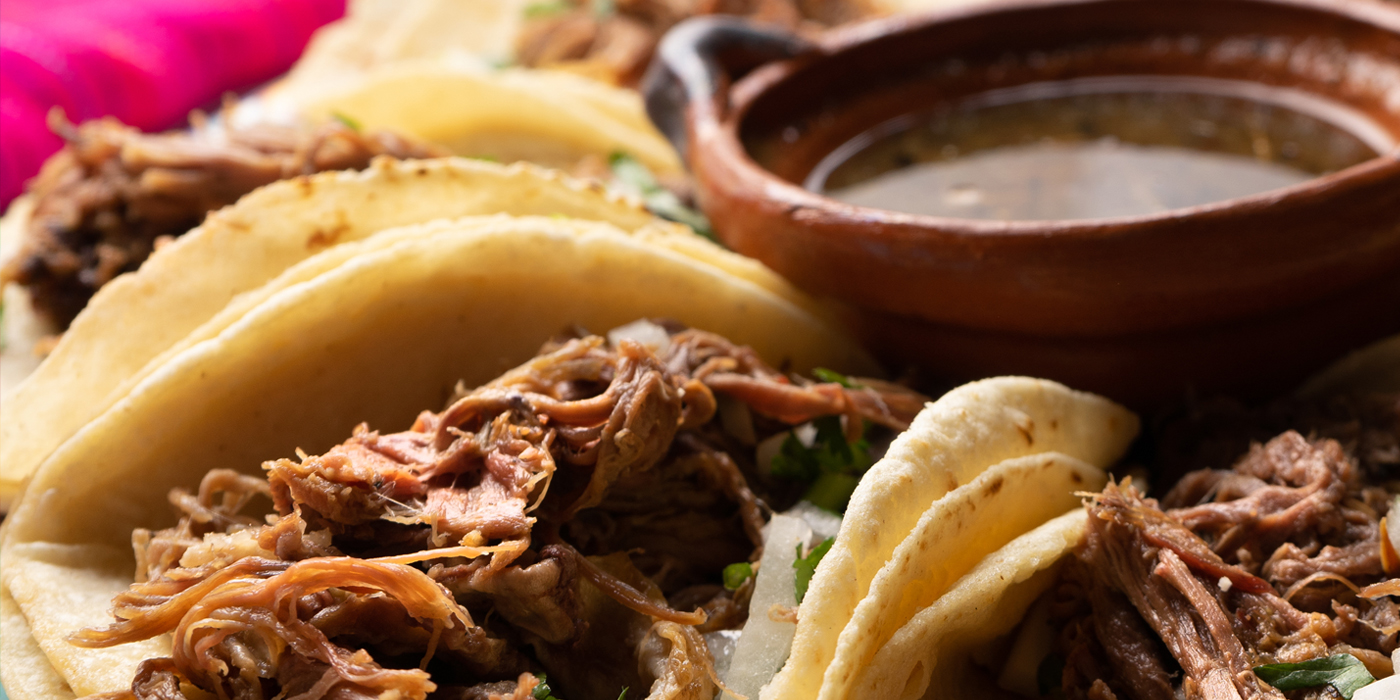
Lamb barbacoa estilo Hidalgo that locals don’t always rush to share with visitors. Tucked behind the restaurant La Tequila on Napoleón and Reforma, it opens only on Saturdays and Sundays from 8:30 am to 4 pm. The lamb goes into an underground pit lined with maguey leaves the night before and comes out falling apart by morning. Order it by weight, in flautas, or as a mixiote. Don’t skip the consomé with garbanzo or the salsa borracha.
Yunaites at Mercado IV Centenario
A communal table that fills up fast enough to make the point. Hidden inside the Mercado IV Centenario, chef Fabián Delgado serves what he calls “menjurjes pueblerinos”: traditional food from Jalisco and Michoacán, made with ingredients sourced straight from the countryside. There’s a single communal table, tortillas pressed and cooked on the comal as you watch, and a house salsa pajarito built from his father’s recipe. Order the encotijadas, the gordita de cerdo en mole, and the torta de chorizo de Arenal. Open Tuesday through Sunday, 8 am to 2:30 pm.
Tequila Is One Hour Away
The town of Tequila is a Pueblo Mágico surrounded by blue agave fields, and the day trip from Guadalajara is one of the best you can do anywhere in Mexico.
The Tequila Express departs every Friday, Saturday, and Sunday throughout the year. The all-inclusive tour package includes a round-trip train ride from Guadalajara to Tequila, a visit to agave fields, the tequila production process, cocktail tasting, a full meal, live mariachi, a pre-Hispanic and folkloric ballet, charro performances, and free time in the Pueblo Mágico. The all-inclusive tour departs on Saturdays and starts from $4,150 MXN. If you prefer just the train ride, options start from $1,200 MXN, with train plus distillery visits from $2,500 MXN. Book ahead; Saturdays sell out fast during the World Cup weeks.
Mariachi, Neighborhoods, and Things You Won’t Find on a Tour Bus
Tequila Lab
Before you make the trip to Tequila town, or even if you don’t, Tequila Lab in Zapopan is worth an afternoon. Opened in late 2024 and backed by the Jalisco government and the Consejo Regulador del Tequila, it’s the first museum in the Guadalajara metro area dedicated entirely to tequila’s culture, history, and Denomination of Origin — with no brand agenda attached. The route takes you through the geology of the agave landscape, a recreation of a working still, and a display of over 3,000 different tequila bottles. The olfactory lab, curated by a master tequilero, is where you learn to identify the herbal, fruity, and woody notes in the glass before you drink it. The experience closes with a 360-degree immersive projection of the agave landscape, a UNESCO World Heritage Site. Open Tuesday through Sunday, 11am to 7pm.
Museo JAPI
Also in Zapopan, and right next door to Tequila Lab, JAPI (Jalisco Paseo Interactivo) is a full reinvention of what was once the beloved Trompo Mágico museum. The 8,300 square meter space now runs 90 interactive exhibits across six themed areas — science, nature, culture, creativity, sport, and identity — built around the idea that Jalisco is more than a postcard. The standout is Teatro Werika, a flying theater with 40 robotic seats that move in sync with an immersive aerial film soaring over more than 30 of Jalisco’s most iconic landscapes: blue agave fields, mountain forests, Puerto Vallarta, Lake Chapala, and the Nevado de Colima. The name comes from the Wixárika word for eagle. Tickets run $150 MXN for adults, $75 MXN for children and seniors. Open Tuesday through Sunday.
Where Mariachi Lives
Guadalajara is where mariachi comes from — that’s not a tourism claim, that’s history. The Plaza de los Mariachis is where bands still gather to play, and on weekend evenings the sound spills across the cobblestones. You can commission a song on the spot. For the grand version, the Teatro Degollado hosts mariachi performances with the Orquesta Filarmónica de Jalisco — check their program during your stay.
Tlaquepaque and Colonia Americana
San Pedro Tlaquepaque’s downtown is filled with cobblestone streets, artisan workshops, galleries, and restaurants. El Parián is a 19th-century food court where mariachi and folkloric dance shows happen around a central bandstand. It’s about 20 minutes from the city center and worth a half day, easily combined with a stop at Tonalá for pottery and textiles.
For nightlife, Avenida Chapultepec in Colonia Americana is Guadalajara’s answer to Roma Norte — a walkable strip of craft beer bars, mezcalerías, specialty restaurants, and open-air terraces where the local crowd gathers from 9pm onward. Cocktails run 130–180 MXN, beers from 50–80 MXN, and most venues have no cover charge. Start the night here, then head toward Plaza de los Mariachis closer to midnight when the energy peaks.
Guadalajara has hosted World Cups before, 1970, 1986, and now 2026. What hasn’t changed is the city’s ability to make you feel like the match was just the excuse to be here. Whether you end the night with tacos at 2 am or start the morning with a blue corn gordita at Nejayote, this city gives you more than you planned for. Save room in the itinerary. You’ll need it.